
Body 1
Emil Kamali has been fascinated with the membership model ever since creator economy platforms like completely changed the game for creator ownership and monetization. Over the last couple of years, he’s studied the leading products in this space after leaving the VC world for startups, and while writing a newsletter about new media trends. Earlier this year, he co-founded Temple along with Ben Cooper.
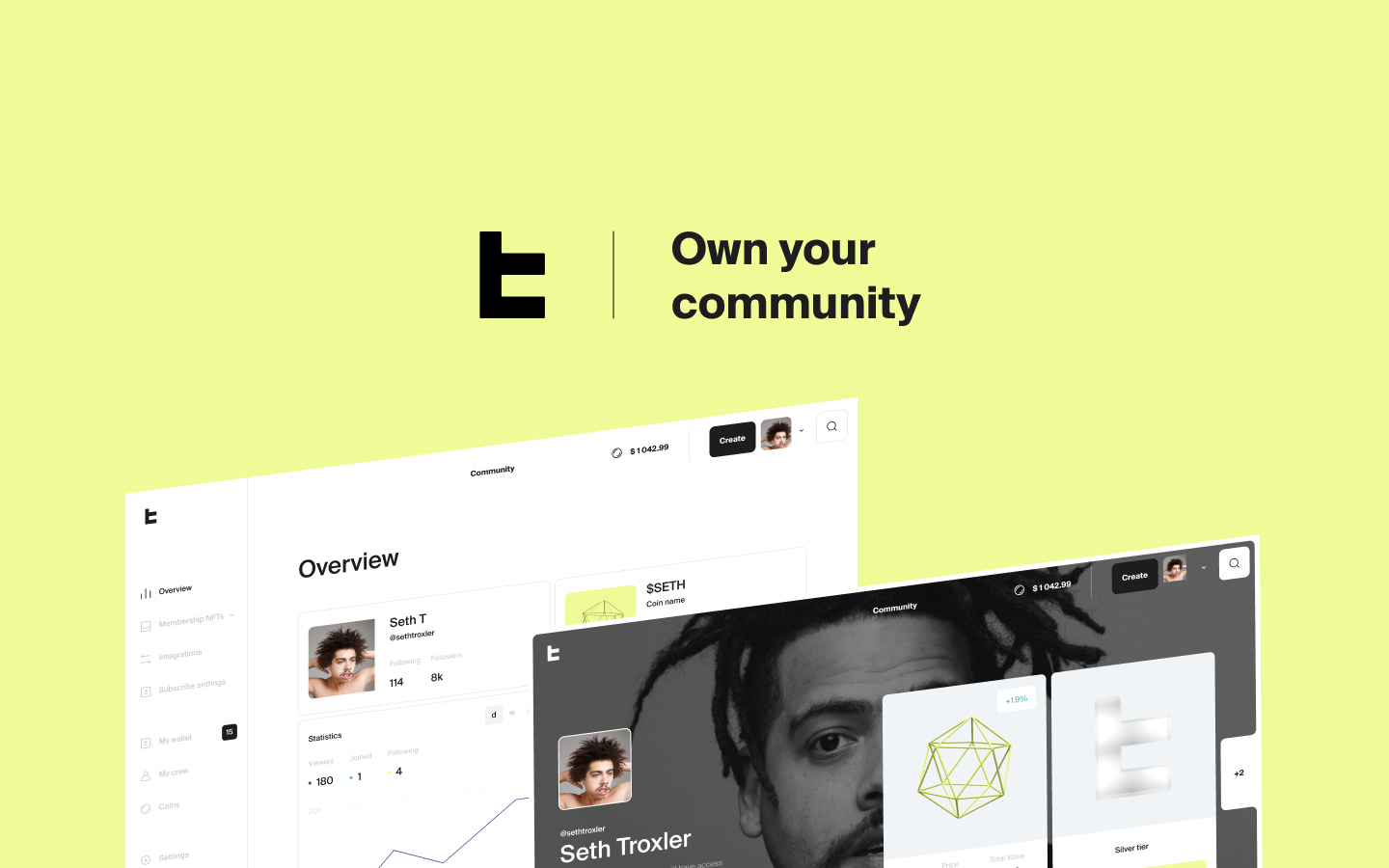
Simply put, Temple is a membership platform built for web3. The idea is for creators to be able to make content exclusively available to subscribers, and for subscribers to pay for that content with social tokens and NFTs. Temple will integrate with other tools and platforms like Discord, WordPress, Shopify, in order to give creators a way to quickly and easily token-gate their membership. Ismail and Miller believe that crypto has big advantages over fiat currency when it comes to the membership model, and are focused on building the tool that will usher us into this new phase of subscriber-based content.
In November, they became the first recipient of Rally’s Community Developer Council grant, which they will use to make that vision a reality. By February, Temple will publicly launch its WordPress and Shopify plug-ins, the first of many integrations, which are currently in beta. Below, we talked to Ismail about applying for the grant, building on the Rally ecosystem, and the ways that membership will differ (and improve) with web3.
First of all, congratulations on receiving the CDC grant. Can you tell me a bit about the process of applying for it?
I found out about the grant program via the Rally Discord. I’d been following the Rally community for a few months. Since we were a startup that was building infrastructure for the social token space, I’d spoken to a couple of Rally creators and a few members of the team to introduce myself. They mentioned an upcoming grant program, which we were eagerly waiting to come to fruition. When, on one of the weekly developer calls, someone mentioned that the grant process was finally ready to kick off, we were the first to apply.
That was in November 2021. It took about three weeks from the moment we applied until the cash was in our wallet, which is awesome when you’re a cash-strapped startup.
What’s your background? How did you end up founding Temple?
I started my career in investment banking, a very different world. I was analyzing stocks as an equity research analyst, which I did in London and Amsterdam for about three years. It was fun, it taught me a lot, but I quickly realized that I was much more interested in tech and in startups.
I made the leap into the startup world by joining a music streaming company called Mixcloud. They’d just raised a big Series A to build the “Patreon for DJs” (Mixcloud Select). They grew from a team of 12 to a team of 60 within a few months, so it was a really fun, crazy, and high energy time to be there. I spent a lot of time studying the leading creator economy platforms. I was focused on really understanding the drivers that made those products successful and trying to apply those learnings to Mixcloud. It was also at Mixcloud where I met my co-founder Sam Millar.
I later joined a media-focused VC fund called Supernode Global as an associate. There, we invested in pre-seed to Series A startups in the media space, and naturally the creator economy is very central to that. I started writing a weekly newsletter called Not So Distant while I was there. The premise was to research and write about the big, buzzy media trends happening at the time. Very quickly, it became apparent that I was only really interested in researching and publishing about web3. In particular, I was fascinated by the intersection between web3 and the creator economy, and I was astonished by how much NFTs and social tokens represented a fundamentally better business model for the creator economy space.
I eventually became so engrossed by web3 that I quit my job with the aim of building a company in the space. Founders Factory, an incubator/VC that invests in idea-stage concepts, invested in us shortly after that. We've been building Temple with them for the past four months.
Can you give an overview of what Temple is?
Temple is a membership platform that's built for web3. We want to enable creators to deliver exclusive, ‘members-only’ content and perks across multiple platforms, ranging from Discord to WordPress to Shopify.
There are two core differences between us and web2 membership platforms: The first is that rather than requiring fans to pay for membership with fiat currency, we enable fans to pay with NFTs and social tokens. Eventually, our platform will be agnostic to where the tokens have been created, and we plan to support every major blockchain and L2. We’ve kicked off exclusively on Rally as we feel it is the ecosystem with the most vibrant community of web3 creators. But we recognise that different creators will have different needs, and we want to cater to them all regardless of where their tokens have been created.
The second difference is that we are highly interoperable. We plan to integrate with the various tools and platforms that exist out there. We’ve started with Discord, WordPress and Shopify, but we eventually want to enable creators to deliver members-only perks in games, virtual worlds, apps—wherever the creator wants their community to exist.
I’m curious, after researching and writing so much about web3, what made you want to build a membership platform? What compelled you to take that path?
Even web2 memberships, for me, were revolutionary. You saw all of these creators getting screwed by the big platforms—having these huge audiences on Instagram, on TikTok, on Facebook, Twitter, and Spotify, but being unable to efficiently monetize and own the relationship with their fans. Then you had platforms coming in and changing the rules. They said you can run your discovery and user acquisition on these big platforms but for your most loyal 100 to 10,000 fans, who are willing to pay more, you can better monetize and engage them with a membership model.
That was amazing, and I think there’s still so much further that the membership model can grow. But as I started researching social tokens and NFTs, I quickly realized the huge advantages that they would have over paying with fiat currency. First of all, tokens are decentralized, so it's very hard for a single centralized platform to change the rules. You only have to look back a few months ago to when OnlyFans made a U-turn on it’s rules and essentially threatened the livelihood of hundreds if not thousands of creators on their platform. Big centralized platforms like Twitter and Facebook change their algorithms all the time, eventually competing and becoming antagonistic with the creators on their platform. This doesn't create a stable environment for creators. If you believe that the creator economy should represent an opportunity to earn a stable livelihood, then I don't think you can ever really rely fully on centralized protocols.
The other important advantage to web3 is that it finally aligns the success of a creator with the success of the fans and the community that they exist within. With current membership platforms, fans pay a few dollars every month and then they get the content. That's great, but they don't get financially rewarded for being a fan despite the fact that they are so crucial to the success of that community. Imagine a creator's community Discord where there's no fans—it would be a meaningless empty space with no value. And yet, until now, most of the financial benefit has been owned by the creator and the platform. That’s what is really interesting to me about web3 models. By being token-holders, fans are financially aligned to the success of that creator, which creates so many strong incentive mechanisms. Once we see a few successful examples of communities that are built using this model, it will be very hard to go back in my opinion.
What do you plan to do with the grant money?
We're a pre-seed startup, so a lot of it will be going to core development work to try and get the best product out there in the shortest time frame possible. But this is also an unusual scenario where there's a very strong incentive for us to hold as much of this grant funding as possible. And so we're being very tactical in terms of what we spend with the view of trying to hold as much of it in Rally token for as long as we can. We're of the view that it's the first time in history where a grant you receive can actually grow three, four, five times the size of what you were initially given.
What's your timeline like for getting this built?
The grant was for two specific plugins. We've kicked off by building a WordPress plugin and a Shopify plugin. WordPress powers 42% of the websites on the internet, and building a plugin for WordPress will make it possible for a huge number of creators and communities to add web3 membership to their websites. Shopify is the dominant platform in the e-commerce space, so if any creator wants to offer physical products as a reward for their token-holders, then this is a really easy, no-code solution to do that. We've built both of them and we’re beta testing them with a handful of creators right now. The plan is that over the next few months, we'll continue increasing the number of creators who we are testing, with a view to have it publicly launched by February 2022.